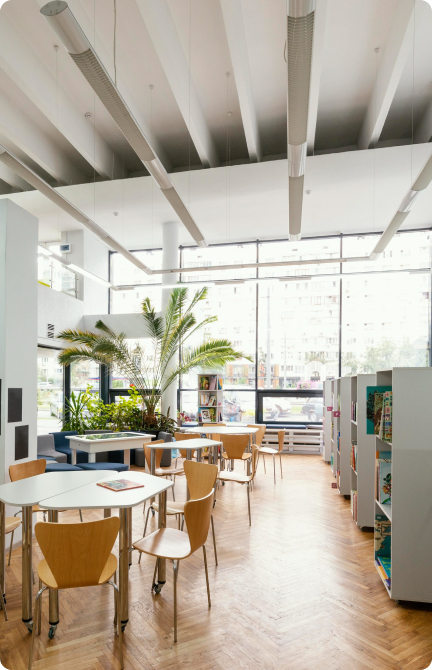
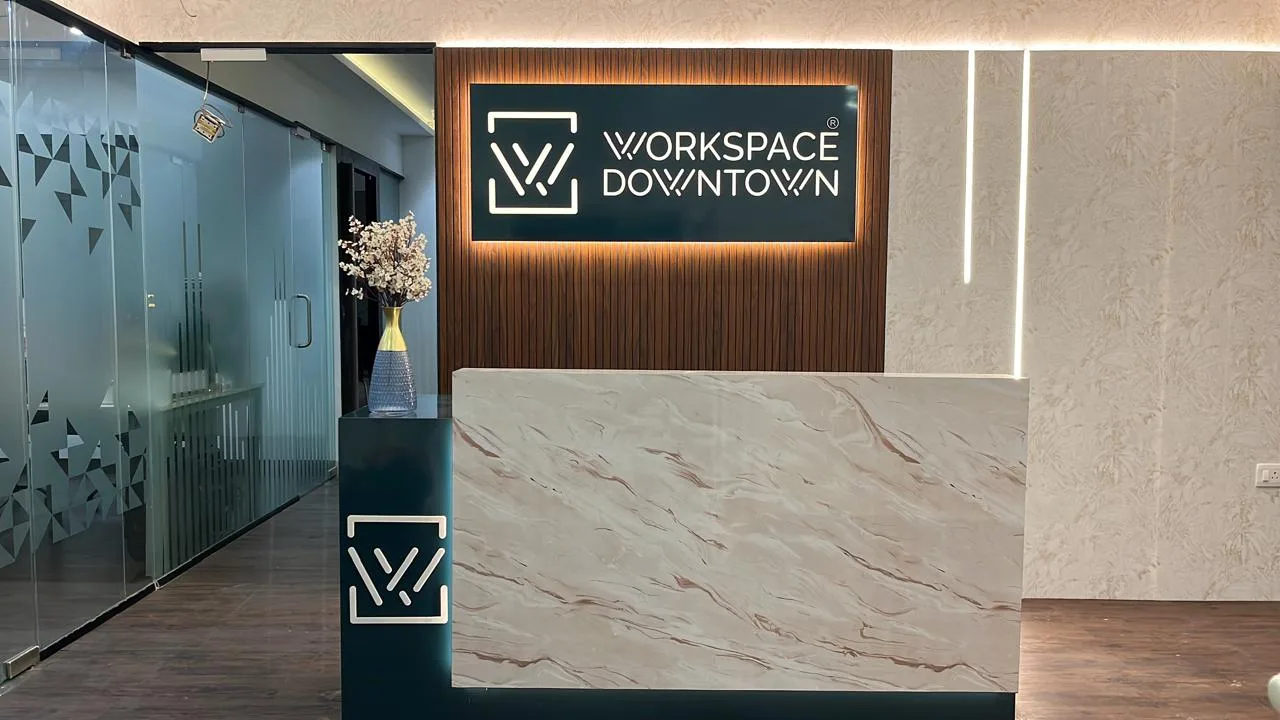
The modern workplace is no longer just a physical setting where tasks are completed; it has evolved into a carefully crafted environment that directly influences human behavior, productivity, and emotional well-being. As businesses adapt to changing work cultures, the rise of Co working spaces reflects a growing awareness of how space design impacts the mind. These shared environments are intentionally designed to foster collaboration, reduce stress, and enhance creativity, making them more than just offices they are psychological ecosystems.
At the core of workspace psychology lies the concept of environmental influence. Human beings are highly responsive to their surroundings, and subtle design elements such as lighting, color, spatial arrangement, and acoustics can significantly affect mood and performance. Natural light, for instance, has been proven to boost serotonin levels, leading to improved focus and reduced fatigue. This is why many modern offices prioritize large windows, open layouts, and biophilic elements like indoor plants. These features are not just aesthetic choices but strategic decisions rooted in behavioral science.
Color psychology also plays a vital role in workspace design. Blue tones are often associated with calmness and concentration, making them ideal for analytical tasks, while warmer shades like orange and yellow can stimulate creativity and energy. Designers carefully select palettes depending on the intended function of a space. In collaborative zones, vibrant hues encourage interaction, whereas private work areas often use muted tones to promote deep focus. This balance ensures that employees can transition seamlessly between different modes of work.
Another critical factor is spatial organization. Open-plan offices gained popularity for promoting teamwork and transparency, but they also introduced challenges such as noise and lack of privacy. This led to the emergence of hybrid layouts that combine open areas with quiet zones and Private office space for rent options. These spaces cater to diverse work preferences, allowing individuals to choose environments that align with their tasks and personality. The ability to control one’s workspace whether through adjustable furniture or flexible seating enhances autonomy, which is a key driver of motivation and job satisfaction.
The psychology of ownership and personalization further underscores the importance of workspace design. When individuals have the freedom to personalize their desks or choose their working spot, they develop a sense of belonging and identity within the organization. This emotional connection can lead to increased engagement and loyalty. In shared environments like Co working spaces this is often achieved through customizable workstations and community-driven design elements that encourage interaction while respecting individuality.
Acoustics is another often-overlooked aspect that has a profound psychological impact. Excessive noise can lead to cognitive overload, reducing productivity and increasing stress levels. Modern workspaces address this by incorporating sound-absorbing materials, quiet pods, and designated silent zones. These solutions ensure that employees can focus without constant interruptions, which is especially important in high-density environments. The availability of Private office space for rent also provides an escape from noise, offering a controlled environment for tasks that require deep concentration.
The role of ergonomics cannot be ignored when discussing workspace psychology. Poorly designed furniture can lead to physical discomfort, which in turn affects mental well-being and efficiency. Ergonomic chairs, adjustable desks, and proper screen positioning are essential for maintaining physical health and preventing fatigue. When employees feel physically comfortable, they are more likely to remain engaged and productive throughout the day. This connection between physical and psychological comfort highlights the holistic nature of effective workspace design.
Social interaction is another key component influenced by design. Humans are inherently social beings, and opportunities for interaction can enhance creativity and problem-solving. Informal meeting areas, lounges, and communal kitchens are intentionally designed to facilitate spontaneous conversations and idea sharing. In Co working spaces these communal zones are central to the experience, creating a sense of community and collaboration among diverse professionals. This social dynamic not only improves work outcomes but also contributes to emotional well-being by reducing feelings of isolation.
Flexibility is perhaps the most defining characteristic of modern workspace design. The traditional nine-to-five office model is being replaced by dynamic environments that adapt to changing needs. Flexible layouts, movable partitions, and multi-functional spaces allow organizations to evolve without significant structural changes. This adaptability is particularly evident in the growing demand for Private office space for rent, which offers businesses the ability to scale operations without long-term commitments. Such flexibility reduces stress and uncertainty, enabling companies and individuals to focus on growth and innovation.
Technology integration also plays a crucial role in shaping the psychological experience of a workspace. Seamless connectivity, smart lighting systems, and digital collaboration tools enhance efficiency and reduce frustration. When technology works intuitively, it minimizes cognitive load, allowing individuals to concentrate on their tasks rather than troubleshooting issues. This alignment between physical and digital environments creates a cohesive experience that supports productivity and well-being.
Ultimately, the psychology behind workspace design is about creating environments that align with human needs and behaviors. It is not just about aesthetics or functionality but about understanding how people think, feel, and interact within a space. By incorporating elements that promote comfort, flexibility, and social connection, modern workspaces can significantly enhance both individual performance and organizational success. As the demand for innovative work environments continues to grow, the principles of psychological design will remain at the forefront, shaping the future of how and where we work.
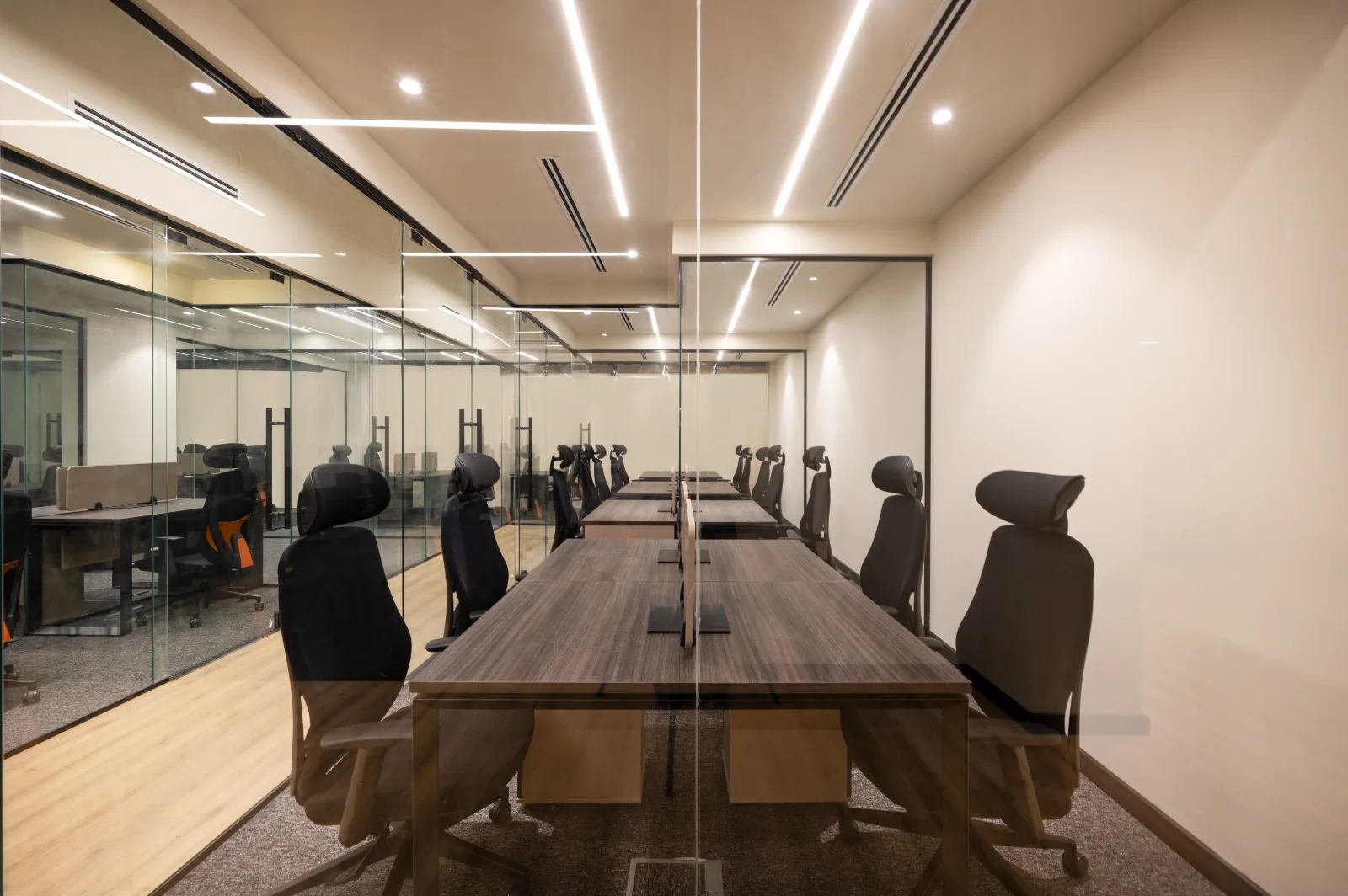
Every startup has the same instinct. Spend less. Stretch the runway. Make do. Office space is usually one of the first places founders try to cut corners, because on paper, it feels safe. Four walls, a few desks, decent Wi-Fi. What more could you need? But over the last few years, we’ve watched this thinking quietly cost teams far more than it saves. The shift to hybrid work, faster hiring cycles, and investor pressure to scale efficiently have changed what an office is supposed to do. It is no longer just a place to sit. It is infrastructure for growth, culture, and speed.
In our experience working with early-stage and scaling companies, the mistake is hardly ever choosing a small office; it is choosing the wrong one for the stage you are actually in, not the stage you may think you are in.
Understand costs for office spaces.
When founders look at office space costs for startups, the number they pay most attention to is rent, but that view is incomplete. Rent is the visible cost. The hidden costs emerge only later: when the team grows, workflows change, or expectations rise.
We can imagine it unfolding in fairly predictable ways. A team outgrows meeting rooms in a few months, meaning calls are taken in corridors or cafés. Poor acoustics make collaboration a distraction. Inadequate power and layout require constant rearranging. Before long, productivity suffers, frustration goes up, and leadership starts planning another move much sooner than expected.
Industry studies have repeatedly shown that frequent office moves impact progress, consume executive time, and influence employee retention. Often, the loss of momentum, focus, and continued adaptation costs more in the long run than any initial rent savings. In startups, time and clarity are expensive. Cheap space that hurts decision-making or erodes company culture is just that: cheap. It is neither beneficial nor worth the trouble.
A better metric is how well an office environment delivers outcomes. Will it facilitate concentrated work? Will it enable collaborative work? Can it scale? Does it communicate the quality of your business? These factors matter far more than square-foot costs.
Why “affordable office space” means more than low rent
The phrase “affordable office space for startups” has become misleading. Affordability is not about paying the least. It is about paying for exactly what you need and nothing you do not.
For years, “affordable” meant compromising on something. Today, it means precision. Startups want spaces that are rightly sized, professionally managed, and ready to use from day one. They do not want to spend weeks setting up internet, security, or basic amenities. They want to walk in and start working.
There is clear traction in the market. Founders are beginning to choose environments with lower overall overhead, even if base rent appears slightly higher. The math works because they avoid setup costs, admin burden, and early relocation. More importantly, teams function better in intentionally designed environments, not duct-taped ones.
“Affordable” also means predictable.
Startups already live with enough uncertainty. Office space should not be one of them. Predictable costs allow leadership to focus on building the business, not managing the building.
Flexible office space for startups is the current shift. It reflects how companies actually grow: in spurts, not straight lines. Teams expand, roles change, and functions evolve. What worked six months ago often needs adjusting today.
Flexibility is not just about shorter leases. It is about spaces that adapt without disruption. Modular layouts, shared resources, scalable footprints, and professional support systems allow startups to grow without hitting reset every year.
From what we see, flexibility also affects talent. People want workplaces that feel considered and comfortable, not temporary or improvised. A well-designed flexible office signals that the company is serious, stable, and thoughtful, even at an early stage.
This matters even more now. Startups compete not only on product, but on experience. The office is part of that experience, especially as teams return to collaborative workspaces with higher expectations.
Why Workspace Downtown does office space differently
At Workspace Downtown, we observe how startups actually use space, not how they imagine they will use it. That distinction shapes everything we do. We do not start with square footage. We start with how teams function, how decisions are made, how often collaboration happens, and how fast the company expects to grow. Across industries, we have seen what accelerates momentum and what quietly slows it.
We know what misalignment costs. That is why our approach is built on readiness, flexibility, and added value, not short-term savings. Office space should eliminate friction, not create it.
Why this approach works for growing firms
Early workspace decisions compound. Teams settle in faster. Leaders plan better. Culture forms naturally. Clients and investors see a company that looks established.
Why do clients trust Workspace Downtown? Because we act as partners, not just space providers. We help startups avoid common mistakes and plan ahead, choosing environments that match where they are going, not just where they are today. The result is fewer bottlenecks, stronger performance, and higher-performing teams.
As competition in the startup world increases, the companies that pull ahead are the ones making intentional choices early. Office space is one of those choices. Cheap space is only cheap until it starts costing you growth. Choosing wisely is not an expense. It is an advantage.
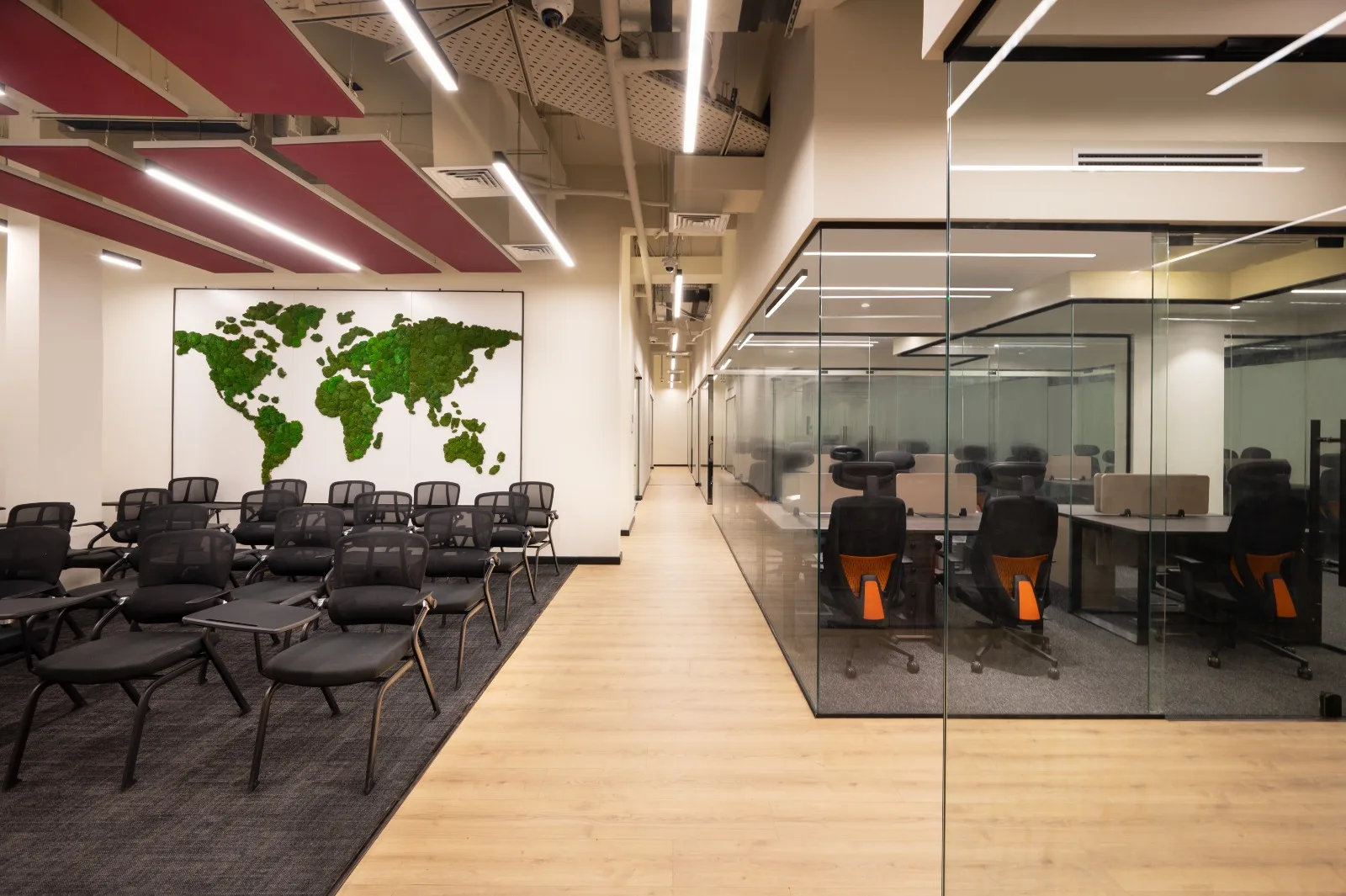
office spaces
Traditionally, startups treated their first office like a checkbox: a desk, decent Wi-Fi, and a door that closes. That was the bar. Get those three things, and you were operational. Teams have different expectations. The tools they use are more sophisticated. The way they collaborate has evolved. Walking into a new office space or setting up your very first one requires more thought than it used to. You need a checklist, but more importantly, you need to understand why each item on that list actually matters.
Here’s what we’re unpacking: the must-have elements every founder should consider before signing a lease or planning renovations. Because the right environment doesn’t just support your work. It accelerates it.
Planning Your Office Setup for a New Business
When we talk about “office setup” for a new business, we’re really talking about intention. Every square foot should have a purpose. Every decision should connect back to how your team actually works.
Too many founders get distracted by aesthetics before they’ve thought through workflow. They pick chairs and paint colors before figuring out where people will collaborate most effectively, where they’ll need quiet focus, or how they’ll access the tools they use daily.
What’s working in Dubai and in other forward-thinking markets is flexibility. The coworking culture that’s taken hold globally proves one thing clearly: adaptable environments outlast rigid ones. Smart founders design spaces that feel comfortable and functional without creating unnecessary friction. They think in terms of what can shift as the team grows, not what looks impressive on day one.
Building Office Infrastructure for Startups that Scale
“Office infrastructure for startups” sounds technical, but it really just means building something reliable and future-proof. Yes, you need power outlets. But you also need connectivity that doesn’t drop during a client call, security systems that protect your data, and network capacity that supports your growth. Your tech backbone should be invisible when it’s working and immediately fixable when it’s not.
The basics now include things that used to be considered upgrades: reliable printing, guest Wi-Fi that doesn’t require IT support to access, unified communication tools, and simple booking systems for meeting rooms. These aren’t luxuries for fast-moving teams. They’re necessities, and don’t underestimate operational support. Cleaning services, mail handling, courier management, professional reception coverage, these might seem secondary, but they keep your core team focused on what actually drives the business forward. You didn’t start a company to manage facilities. You started it to solve a problem or build something new.
This isn’t about adding frills. It’s about removing friction. When the basics work seamlessly, your team can focus on meaningful work instead of logistics.
Why Workspace Downtown Gets It
At Workspace Downtown, our philosophy is straightforward: we’re not selling desks. We’re building the foundation that lets your business thrive. Our offices in downtown Dubai are designed around how modern teams actually operate. Companies choose us because they want workspaces that are productive, professional, and easy to use. You shouldn’t have to choose between comfort and capability, or between flexibility and a polished brand presence. We deliver both.
What sets us apart is understanding that different teams have different needs. A three-person startup has different requirements than a 20-person scaling company. We’ve built infrastructure that adapts rather than forces you into a one-size-fits-all model.
Why This Approach Works
You don’t need a generic checklist. You need a strategy. Great office environments come from decisions rooted in how your specific team works, not what’s trending on design blogs. That’s where we start. Every investment in your space should produce a measurable improvement in workflow, collaboration, or culture.
Our process focuses on outcomes: less downtime, stronger engagement, and spaces that grow with you instead of constraining you. We’ve hosted teams across industries for years, and we’ve learned what separates functional spaces from exceptional ones. That expertise isn’t theoretical. It’s built from watching what actually works.
Good setup choices become competitive advantages. When your team isn’t fighting their environment, they perform better. When clients visit and see a professional, well-run operation, it builds confidence. When you need to scale quickly, having adaptable infrastructure means you’re not starting over.
What This Means for Your First Office
Your first office is more than a lease agreement. It’s where your vision becomes tangible, your culture starts to form, and your productivity becomes real. Get it right from the start, and you set yourself up to scale without backtracking on space, tools, or structure. You won’t need to rip everything out in 18 months because you outgrew a rigid setup or because the infrastructure couldn’t support growth.
Office needs will keep evolving. Design trends will shift. But the fundamentals remain: adaptability, efficiency, and creating an environment where people can do their best work. Those are the elements worth investing in early, because they compound over time. This is how you build a team and a business that lasts.
office spaces
Startups are leaner, more intentional, and far more aware of how space affects performance. Founders are no longer asking, “What looks impressive?” They’re asking, “What actually helps my team work better, stay focused, and grow without friction?” We see this shift every day. The modern workspace is no longer a showroom: it’s an operating system.
That is where the discussion about the best office amenities for startup business really commences.
What founders now expect from the best offices for their startups
In 2026, startups are not competing on excess; they are competing on clarity. Communities are looking for environments that make their lives easier, not harder. Reliable and enterprise-grade-quality networking is now non-negotiable. It’s not just about having robust and quick Internet anymore; it’s also about delivering that Internet during critical times of operation and when working with others all around the globe. When the Internet and networking are out of commission, productivity is broken and fragmented.
Sound management is yet another silent priority. While open-plan designs were the epitome of style just ten years ago, today’s workforce needs the depth of full isolation coupled with the strength of full interaction. Successful offices create the perfect balance of sound through creativity in planning full isolation chambers. But let’s be clear: this is not about quiet. It is about control.
Even the facilities and spaces where meetings take place have become somewhat managed. Startups don’t need many meeting rooms. They just need the most suitable ones. Meeting spaces that can support hybrid meetings, pitches, and internal meetings without technical or booking issues. Successful meetings result in speedy decision-making processes.
Even something as basic as lighting, air quality, or ergonomic design has shifted from “nice to have” to “must have.” This recognition stems from the founders’ desire to understand that burnout is not an inherent result of workload and responsibilities. It arises from an environment that leaches away productivity every day.
The Impact of Future Office Facilities on Daily Work
What we’re really talking about when we talk about what’s coming in terms of office amenities is what’s happening on a human level in terms of how work is becoming more than a team of people simply coming in to sit in a chair at a desk. What’s coming are offices to facilitate moments that matter to us. Thinking, deciding, working together, and of course, unplugging to recharge from all that’s happened in a day of work.
Being flexible has become essential. Startups are growing in every possible way faster compared to established organizations. Space amenities that encourage flexibility to adapt quickly to growth and changes are much more important compared to luxurious and impressive designs.
Another change involves technology itself. We no longer think of it as a feature to consider in a conference center. We think of it as a backdrop to work. Smart access control technologies, straightforward room management solutions, and collaborative working have a clear goal: to completely integrate these concepts into the background of work processes in such a way that no staff member consciously realizes what’s available to support them to achieve their aims.
Wellness has also grown up. In 2026, perks like access to natural light, quiet areas, and well-thought-out shared public spaces actually help people manage energy throughout the day. Startups have realized that being more productive isn’t about being better at the task at hand; it’s about maintaining the energy to keep pushing forward. Location-based facilities will also continue to gain more significance. Facilities like proximity to public transportation, dining options, and service professionals make daily life easier. If the workplace is embedded in the rest of daily life, people will be more engaged.
What really makes up next-gen office amenities today
“Next-gen” has been bandied about quite a lot in the context of future office amenities. The reality is that the phrase has very little real meaning in this context. What does “next-gen” actually mean from our point of view? It has very little to do with the word “futuristic.”
New next-gen office amenities respect personal time. They reduce waiting times, troubleshooting issues, and minimize movement around any environment. They speedily guide personnel in shifting between different tasks without requiring them to reset their environment every hour or so. They also respect autonomy. Teams want spaces that let them choose how to work on a given day. Whether that’s a quiet corner for focused execution or an open area for creative discussion, the best amenities offer options without overwhelming choice.
Of course, this also contributes to security and reliability. With startups handling sensitive data and global clients earlier in their life cycle, secure access, controlled entry points, and reliable systems become imperative. Trust is conveyed not just by people, but by environments that appear stable and professional. Most importantly, next-gen amenities align with outcomes. They don’t exist to impress visitors; they exist to help teams move faster, think more clearly, and collaborate better.
Why Workspace Downtown understands this shift
At Workspace Downtown, we never design spaces based on a trend alone. We design based on observation. The years of working closely with startups have shown us what gets used daily and what quietly gathers dust. We pay attention to how teams move through their day: where they pause, get stuck, or where friction shows up. That insight shapes every decision we make-from layout planning to amenity selection.
This cross-industry experience has given us a wider lens. We see how early-stage teams grow into structured organizations and how their needs evolve along the way. That perspective lets us design environments that support growth without requiring constant relocation or redesign. We don’t think in terms of “loading up a space with lots of features”. We think in terms of “getting the right features, implemented correctly, and serviced correctly”. Consistency may be as important as creative freedom; in some contexts, that’s a given
Why This Model Is Applicable to a New Team
Startups thrive when attention is on the business and not on the building. Our approach works because we focus on removing distraction and not on adding spectacle. So if the amenity itself is easy to understand, the team can settle in much faster. If the infrastructure itself is robust, the leaders don’t have to constantly fight issues. If the space adjusts itself so that the growth feels controllable rather than unmanageably chaotic.
Clients choose Workspace Downtown because we act as partners, not landlords. We understand that office space is a strategic tool. When aligned correctly, it supports culture, performance, and credibility all at once. We design for the long game. Not just the first impression, but the thousandth workday.
The office in 2026 isn’t disappearing. It’s becoming more honest. Amenities are no longer about showing what a company can afford. They’re about showing how seriously it takes its people and its work. The future belongs to workspaces that understand this balance. Spaces that feel effortless, grounded, and quietly effective. At Workspace Downtown, that’s the future we’re building toward, one thoughtful decision at a time.
office spaces
We’ve been blaming work-life balance problems on people for years. Poor time management, weak discipline, too many notifications, but after watching how professionals actually work today, we’ve learned something different. The issue isn’t effort, it’s environment. Work has seeped into places it’s not supposed to be. Dining tables became desks. Bedrooms became meeting rooms. Day stopped having clear edges. Where work lives everywhere, balance becomes theoretical. And no productivity hack will fix that.
Why Coworking Spaces Are Being Reframed Around Balance
Coworking didn’t start as a lifestyle concept, rather, it started off purely practical: a place to work, without either the rigidity of traditional offices or the chaos of home. Coworking for work-life balance, today, professionals are rediscovering that original purpose. A good coworking space creates a psychological switch. When you enter, you’re working. When you leave, you’re not, that separation matters more than flexible hours ever did.
We also notice that members who cowork with intention tend to get their work done quicker, not slower. The focus is sharper when there’s a thoughtful design for eliminating distractions. Meetings happen in proper rooms. Calls don’t bleed into personal space. Work ceases to feel like it is always hovering in the background. Coworking for work-life balance succeeds because it reintroduces structure without strangling flexibility. It gives the professional control over where work lives again.
What a truly professional workspace looks like in the UAE
The UAE’s work culture has transformed in a short period of time. Global teams, regional headquarters, start-ups, consultants, and remote-first companies all flourish alongside one another. That kind of diversity demands an increased bar for workspace design and management. A workspace in the UAE today is expected to do more than look great; it actually has to support privacy, productivity, and credibility. Impressively finished meeting rooms are expected by clients. Teams require dependable infrastructure to get things done. And individuals need quiet zones that really allow them to focus.
In our experience, the most professional workspaces here understand regional work rhythms, business etiquette, and international expectations. It can balance hospitality with seriousness, feel welcoming without feeling casual. This matters because professionals aren’t just choosing where to sit. They’re choosing where to think, negotiate, and make decisions that affect their businesses.
It is Structure, Not Isolation, That Working Remotely Demands
Working from home will not go away anytime soon. But the concept that it means working alone, in isolation, indefinitely is facing a challenge. Turns out, many professionals have found that remote work solutions are strongest when paired with physical spaces. A place to anchor the workday. A location for important meetings. A setting where collaboration naturally has a chance to happen, not just pre-booked video calls.
We’ve seen teams leveraging workspaces as hubs, rather than headquarters. Come in when the need for focused work or collaboration matters most, and otherwise work from home. This hybrid rhythm cuts on burnout without eroding accountability. Remote work works best when it’s supported by intentional infrastructure, and space is part of that infrastructure.
Why hybrid workspaces have become the default
Hybrid office space in the UAE has come a long way from an experiment to a baseline expectation. Firms want flexibility without losing culture. Professionals want autonomy without losing momentum. Hybrid office spaces offer both, they let teams scale up or down without commitments for a long time, support in-person collaboration while allowing respect for individual work styles, and build a sense of community without enforcing constant presence.
From what we see, hybrid isn’t about splitting days evenly. It’s about using space strategically. Coming together when it adds value. Separating when focus is needed. The right workspace makes that balance intuitive rather than forced.
We Approach Workspaces Differently
At Workspace downtown, we have spent years watching how people actually work, not how they say they do. That experience informs every decision that we make. We design spaces for behaviour, not for trends. Quiet areas that remain quiet. Meeting rooms are free when they’re required. Layouts eliminating friction rather than creating it. We aren’t here to impress visitors, we’re here to support professionals who require consistency, clarity, and reliability.
We have worked with solo consultants, growing teams, and established companies. The common thread is always the same: people do better work when the space shows respect for their time and attention.
This Works for Our Clients
Clients choose us over others because they are tired of improvising; they seek a workspace that takes unnecessary decisions off their day. Our approach works because it aligns space with outcomes. Better focus leads to shorter workdays. Clear boundaries reduce burnout. Professional environments support confidence, both internally and externally. We don’t position ourselves as a perk, we position ourselves as a partner-one that understands that work-life balance is not about doing less work but doing the right work in the right place and at the right time.
Work-life balance isn’t dead, it’s waiting for environments that respect it, and as work continues to evolve, so will the spaces that support it.
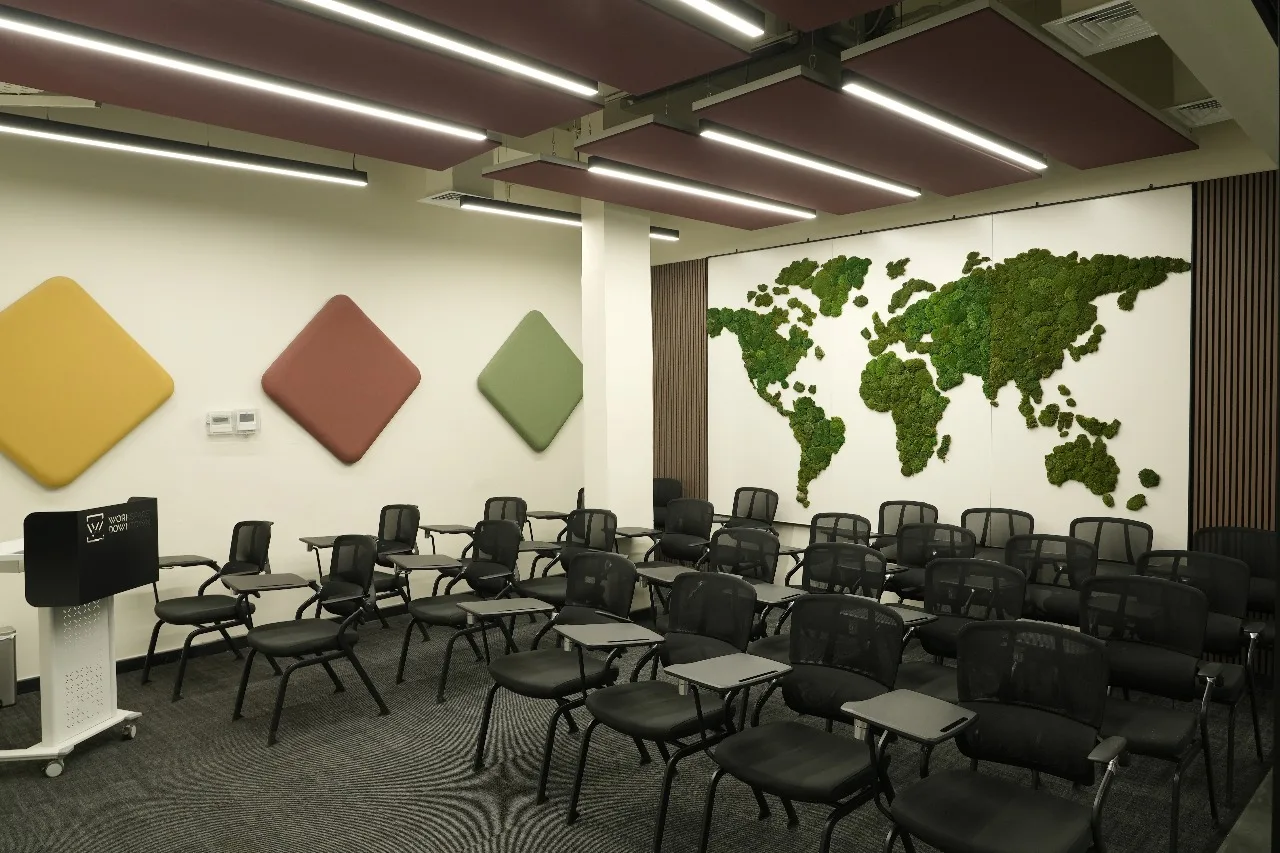
meeting rooms
There’s a curious phenomenon about modern work: the harder we try to separate work and life, the more they blend into each other. Studies continually remind us that humans aren’t built to grind nonstop; we thrive when our environment allows us space to recharge, reset, and breathe. So we asked ourselves a simple question: what if your workplace actually supported your wellbeing instead of draining it? That’s the idea that shaped Workspace Downtown, and the reason people are rethinking where they choose to work.
Choosing a space for work
Walk into any city, and you’ll find offices everywhere. Finding an office space for rent in Dubai that blends focus, calm, and modern amenities is a different journey. Dubai moves fast, and so do the companies that thrive here. Productivity matters, but it also matters to maintain energy, creativity, and clarity throughout the day. This is where our approach shifts gears.
We designed private office environments where teams and individuals can work deeply without feeling boxed in. Natural light, warm textures, ergonomic setups, and purposely designed quiet corners create an atmosphere that encourages good work, not rushed work. And when your brain hits that familiar midday slump, you don’t have to leave the building or fight afternoon traffic to reset. It’s all right here under one roof.
Shared office space in Dubai isn’t just about sitting near strangers who happen to be on their laptops. It’s about belonging to a space that makes you better at what you do. People often tell us that when they step into our shared workspace, they immediately feel something different-something softer, calmer, more intentional.
We designed spaces for collaboration that aren’t chaotic. Think lounges that feel like boutique hotel lobbies, quiet zones that give you library-level focus, and meeting rooms that don’t feel like interrogation chambers. There’s a natural hum of creativity without the usual coworking noise fatigue. You get the energy without the overwhelm.
It’s the kind of place where freelancers, small teams, and entrepreneurs end up staying longer than they had planned, because the environment genuinely supports their workflow. And yes, the coffee helps too.
Ejari Approved Office Spaces
This is Dubai, after all, and if you run a business here, compliance and legitimacy count for a lot. Having an Ejari-approved office space in Dubai takes away the headache of running after papers and inconsistent landlords. It means your business address is registered, recognized, and respected.
We wanted to take the entire process of leasing, documentation, and setup and make it as smooth as possible-no hidden clauses, no surprises, and no last-minute runs for documents. Just a workspace that keeps your operations clean and compliant while still giving you the warmth and comfort of a thoughtfully designed environment.
Where Work Meets Wellness
Here’s where it gets interesting. Most offices focus on square footage. We focus on how your body and brain feel in the space. Researchers say even a five-minute break can restore mental clarity, and movement boosts productivity by nearly 20%. When you add in mood, temperature, scent, and lighting, you realize wellbeing isn’t an add-on; it’s the backbone of good work.
So instead of leaving wellness as a “nice-to-have,” we built it directly into the workspace.
Private Offices with Gyms
Just imagine stepping away from your desk and resetting with a quick workout, no commute, no excuses, no extra membership. Gyms are fully equipped with modern machines, weights, cardio gear, and clean locker facilities. Some members squeeze in a 15-minute routine between meetings. Others hit a full workout before starting their day. The atmosphere stays calm, private, and never overcrowded. It’s well-being designed for busy people who don’t want to compromise.
Facilities for Real Recovery
Work can be overwhelming, and it certainly can take its toll mentally and physically. And that’s why we created our spa spaces to feel as if one might actually step into another world. Soft lighting, warm interiors, peaceful silence. Whether by doing a steam session to clear your mind or just needing that moment of solitude before diving back into deadlines, this spa becomes your personal reset button.
Members often tell us the spa is the reason they stay later to finish tasks; having a decompression zone makes long days feel human again.
We’ve seen teams make some of their best decisions while sitting near the pool, simply because the environment lifts the mental fog. Productivity follows naturally when a workspace looks, sounds, and feels good.
Why It’s So Popular
It isn’t just the facilities. It’s the feeling. People choose Workspace Downtown because they want something that respects both sides of their life—the ambitious one and the human one. The community is warm, the design is intentional, and the amenities remove the daily friction of juggling work and wellbeing.
Businesses grow here because teams are calmer, happier, and more focused. Freelancers thrive here because of an environment that reduces burnout. And startups love it because they receive premium facilities without the complications of traditional leasing. The Future of Work Lives Here The old work culture celebrated exhaustion. The new one celebrates balance. And we’re proud to be part of that shift. Work, relax, repeat-it’s more than a tagline for us; it’s a philosophy. When a workspace treats people like human beings and not machines, the results speak for themselves. We built this place because we knew there was a better way to work. Turns out, we were right. If you want a workspace that supports your goals without draining your energy, Workspace Downtown is ready when you are.
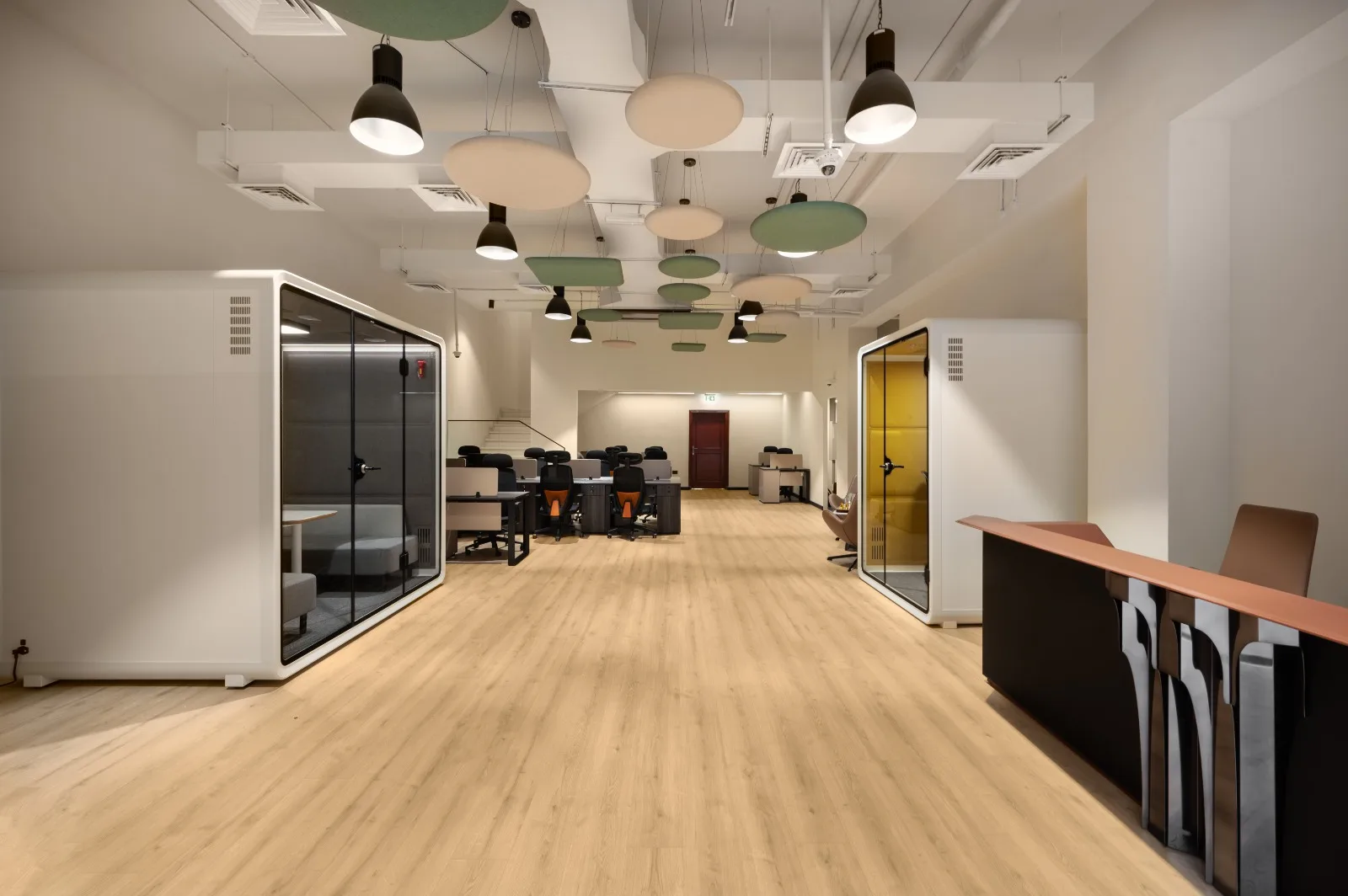
Something interesting is happening with the way people work these days. It is no longer about a desk, a chair, and a door that shuts. The Harvard Business Review found that people in coworking settings actually report feelings of motivation and connectedness more than those in traditional office settings. The modern professional isn’t just choosing a workplace; they are choosing a lifestyle. And we see that every day here at Workspace Downtown, where laptops, conversations, and new ideas tend to spark at the speed of caffeine.
When we talk about the benefits of coworking spaces, convenience invariably tops the list, but the real story runs deeper. The advantages start with the most basic: fast, uninterrupted internet; comfortable seating; meeting rooms that don’t require fighting over booking slots; and dependable utilities. But what really has made coworking so popular over the last decade is how it keeps improving the way people work.
Studies have shown that professionals in coworking spaces tend to feel more productive and less lonely than they do when working from home. We see it, too-there’s an energy that comes from being around people who are all building, solving, creating, and hustling. At Workspace Downtown, that vibe shapes the entire atmosphere.
More importantly, though, you get something a home office can’t offer: structure without pressure. You can focus deeply, but you’re never isolated. You’re independent, but never alone. That balance is exactly why coworking has shifted from a trend to an actual lifestyle choice.
Coworking Culture is needed.
Coworking culture gets people staying after trying it. It’s friendly, collaborative, and refreshingly non-hierarchical. People are all here for different reasons-ideas, clients, routine, community, or even just sanity-but somehow it works out beautifully.
We’ve noticed that once people settle into the culture at Workspace Downtown, they feel lighter. Work feels less mechanical and more human. You start recognizing familiar faces, sharing quick jokes at the coffee machine, or swapping advice with someone from a completely different industry. This culture brings out a sense of belonging that’s hard to replicate anywhere else.
And when the environment around you feels supportive, your work naturally gets better.
Networking Opportunities
Networking opportunities in coworking do something that networking events so often try, and fail to do: they create effortless connections. When you’re sitting next to someone every day, conversation happens. Collaboration happens. Trust happens. We have seen freelancers find agencies, startups find investors, and designers meet up with developers-just because they shared the same space.
We hold regular community events and casual mixers at Workspace Downtown-not because it is the trendy thing to do, but because they actually work. Sometimes all it takes is one conversation over coffee to alter the course of a project, a business, or even a career.
Spaces for professionals
Flexible spaces for professionals are at the core of why coworking works so well. Not everyone operates on the same schedule or to the same rhythm. Today’s professionals want options: quiet areas for deep work, open zones for collaboration, lounges for relaxed thinking, and meeting rooms for serious conversations.
We built Workspace Downtown with that reality in mind. You can choose the environment that matches your task, your mood, or your stress level-because yes, on certain days, you just need a softer chair and a stronger coffee. Flexibility isn’t only a feature but also a form of freedom.
Coworking Spaces and Productivity
There’s a reason so many productivity studies point to coworking as a game-changer. Being surrounded by people who are actually working, typing, planning, designing, and talking business, it pushes you to stay on track.
Productivity isn’t just about effort; it’s about environment. Natural light, sound-balanced areas, ergonomic furniture, and a sense of motion at Workspace Downtown all add up. You don’t just work, you work better. You work with rhythm. You work with intention, and additionally, everything else in life tends to improve when coworking spaces and productivity are thriving.
Freelancers at Workspace Downtown
Coworking for freelancers often juggles independence against the creeping loneliness of working from home. Coworking gives them a safety net: a routine, a community, and a professional address that creates instant credibility.
We see freelancers at Workspace Downtown thriving by being able to meet clients in proper meeting rooms, bounce ideas off peers, or simply feel like part of something bigger than their laptop screen. It’s the lifestyle freelancers didn’t know they desperately needed.
Remote work
Coworking for remote workers without the chaos caused by distractions at home, remote workers enjoy the freedom they long for. No barking dogs, no construction noise, no “Are you free for a minute?” interruptions.
At the Workspace Downtown, remote workers fall into a rhythm. They get reliable infrastructure, a sense of purpose, and enough flexibility to choose their ideal work environment. It’s remote work, but without the isolation.
Startups
Startups crave momentum, and coworking fuels exactly that. Instead of having to lock themselves into long-term leases or worry about overhead costs, they get an environment from day one that supports growth.
We’ve watched young teams brainstorm on whiteboards, pitch investors in our meeting rooms, and celebrate small milestones in the lounge. Workspace Downtown contributes to the coworking for startups’ narrative by helping them in their early stages and growing with them.
Why Coworking Is More Than Just Office Space
Coworking does not replace the traditional office; it evolves it. It makes work healthier, friendlier, and more connected. It merges structure with freedom, logic with lifestyle, and productivity with community. That’s why people don’t just choose coworking to work; they choose it for life.
So, how can coworking improve your lifestyle? A good workspace reduces stress, gives you routine, and surrounds you with people who lift your energy rather than drain it. Coworking gives you that balance: focused mornings, social breaks, productive afternoons, and that mental separation between home and work.
We’ve watched individuals flourish at Workspace Downtown-not just in their careers, but in their confidence, creativity, and well-being in general. The Social Side of Coworking Spaces, the social heartbeat of coworking is what often keeps people coming back: a friendly hello in the morning, a shared laugh in the afternoon, and a quick chat leading to a new idea. A good coworking space reminds you that work doesn’t have to feel lonely. And that simple shift can transform your entire lifestyle.
office spaces
Every business has that moment when it’s ready to grow, bring people together under one roof, and finally claim a place of its own. The moment is exciting, but it also comes with a checklist longer than your afternoon coffee order.
When we speak with companies preparing for their next chapter, a pattern begins to emerge. Everyone wants the right office, but very few start with a clear list of priorities, so here we will be giving you some office space lease tips. A recent study showed that almost 60% of businesses underestimate their long-term space needs, and nearly half don’t read the fine print closely enough. So, from day one, knowing what matters sets the tone for a smarter lease journey.
Before Leasing Office
We always encourage businesses to zoom out and think about the bigger picture, and what things to consider before leasing, before signing anything. Is this space going to support your team’s growth for the next three years? Does it have the infrastructure your industry requires? Are you locked into a contract you’re going to regret six months in? Those early questions shape the experience far more than the color of the carpet or the number of meeting rooms.
Choosing an Office Location is usually the maker or breaker of a deal. In Dubai, accessibility is half the reason a workspace succeeds. A prime address automatically elevates your brand’s credibility, clients take you more seriously, and employees appreciate the convenience. Research from JLL proves offices closer to transit hubs experience higher employee retention and fewer late arrivals.
That’s what makes Workspace Downtown unique: being right in the middle of the city, you’re a few minutes from the metro, business districts, dining spots, and every convenience that your team could expect from modern city life.
Once you’ve figured out where, the next question is how much office space size required. We’ve seen companies choose spaces that look perfect on a walkthrough but feel cramped once the furniture rolls in. The ideal office isn’t about the square footage; it’s about future-proofing. Teams grow. Departments expand. Equipment multiplies. And as all those studies keep telling us, dense seating not only hurts productivity but also increases levels of stress.
We assist businesses in calculating realistic, not aspirational, size requirements. The result is an office that breathes-literally and strategically.
Next is the Office Layout Considerations, how your team works day in and day out. Does your business thrive on collaboration? Then an open plan makes sense. Do your teams deal with sensitive data? Then private rooms or enclosed pods might be a must-have. Things such as natural light, acoustics, and traffic flow can alter team morale.
At Workspace Downtown, we design our layout to be active and comfortable so teams can do much more than just work-they can thrive.
Flexibility has become the new currency. Many companies want structure, which a traditional office provides, without being tied down by commitments. A survey found that almost 70% of businesses now favor flexible office spaces, especially hybrid teams shifting between in-office and remote setups.
Our flexible office models support expansion, downsizing, and hybrid operations without penalties or complications for short-term transitions. It’s freedom without the chaos.
But with prestige, Dubai’s prime office locations come with a lot more: convenience, visibility, connectivity, and the possibility of collaboration at every turn. Being surrounded by successful businesses creates an environment where deals, partnerships, and ideas happen as a matter of course. It’s like placing yourself in the heartbeat of the city-you feel the energy the moment you walk in.
Workspace Downtown exists for this very reason: to provide businesses with a front-row seat to growth and opportunity.
The thing is, leases can be very tricky. What looks affordable often conceals a few surprises. The cost isn’t just about rent; it’s about utilities, fit-outs, service fees, maintenance, security, and the list goes on. When companies skip this calculation, budgets get eaten alive by “unexpected” expenses.
We always encourage businesses to map out the full office lease cost factors. It’s not glamorous work, but it’s the reason smart companies stay profitable.
It’s not about paying less, but paying right. A better understanding of market averages, vacancy rates, and seasonal demand gives leverage. Very few commercial spaces are outright take-it-or-leave-it propositions. Landlords expect to negotiate office rent, but failing to do so often amounts to leaving money on the table.
Our team walks the client through current market conditions so they can negotiate from a point of confidence, not guesswork.
This is where many businesses trip up, hidden costs in office leases: security deposits, renewal charges, municipality fees, signage approvals, parking costs-it adds up. By the time companies notice, they are tied to terms they can’t escape. One thing people like most about Workspace Downtown is our transparency-no cryptic add-ons, no last-minute surprises. What you see is what you sign.
Half the battle is in understanding your contract. Duration, escalation clauses, renewal conditions, and exit rules are what define your operational freedom. An office lease term is great when it protects both sides, and it’s a nightmare when it doesn’t.
We guide companies through the legal landscape so every clause feels like a commitment, not a trap.
Commercial lease agreements & lease negotiation tips for every business are different. The priorities of a retailer are different from those of a consultancy. A startup does not have the same concerns as an enterprise. That’s why the negotiation process should always reflect who you are as a company, not just what’s inside the walls.
We help teams understand their leverage, clarify their must-haves, and secure terms that support long-term stability.
Why Workspace Downtown is the Smarter Choice When companies choose us, they don’t just rent square footage. They get convenience, flexibility, credibility, and peace of mind. Our spaces are Ejari-approved, centrally located, fully equipped, and tailored to real business needs-not cookie-cutter templates. In a city known for movement and ambition, we offer workspaces that help you grow without friction.
office spaces
When we talk about sustainability, well, we are not raising a green flag for aesthetics. In Dubai’s fast-growing landscape, sustainable office spaces have yielded tangible benefits that every business can feel-be it big, small, or a startup. From energy-efficient lighting to climate-conscious layouts, all of these choices lower operational costs while promoting employee well-being. The city’s global push toward cleaner and more responsible development has made eco-friendly workspaces more than just a trend; they’re a benchmark.
At Workspace Downtown, we’ve leaned into this shift with intention. Our spaces are designed to reduce unnecessary energy use, encourage natural light, and create environments where people simply function better. That balance of comfort and responsibility is what keeps our community growing. So let’s see what the benefits of sustainable office space in Dubai are.
Eco-friendly in Dubai
Dubai has no shortage of shiny buildings, but the real flex is when a workspace performs well from the inside out, so we questioned it, “How to make your office eco-friendly in Dubai?”. Creating an eco-friendly office starts with the basics-lighting that doesn’t drain your power bill, ergonomic layouts that reduce the need for excessive construction, and air quality that doesn’t leave people feeling like they’re trapped in a 2009 meeting room. We design our coworking floors with modularity in mind. That means fewer renovations, less waste, and setups that adapt to your team instead of the other way around.
Our philosophy is underpinned by simplicity: materials that last, spatial planning that works, and a commitment to make places people want to be. Because when an office feels good, productivity doesn’t have to be forced.
Acoustic Pods
Sustainability is not just about energy; it’s also about experience. Noise pollution is the insidious villain of modern office culture, and that’s where our Acoustic Pod solutions make a real difference. These pods create a controlled, sound-focused environment-perfect for calls, interviews, or deep work-without requiring major construction or permanent fixtures.
Every pod has been designed to blend in with the workspace aesthetics while providing a private, quiet corner that improves workflow. It saves teams from booking entire meeting rooms for quick conversations and helps reduce the chaos of open floor plans. It’s a small installation with a big impact.
Office pods
If you’ve been looking into office pods in Dubai, then you’re probably already aware of how much they have taken off over the last couple of years. The fast-paced culture of working in the city requires flexibility, and that is just what the pods provide. Here at Workspace Downtown, our pods are designed to offer everything from high-stakes brainstorming sessions to one-person focused work. They’re compact, comfortable, and built from durable materials reflecting our sustainability commitment.
Where Dubai’s businesses appreciate functionality wrapped in style, our pods meet that expectation without compromise. They are proof that smart design does not have to shout to be effective.
Soundproof office pods
Let’s face it-nobody does great work in an office that sounds like the cafeteria at rush hour. That’s why our soundproof office pods have become one of the most sought-after features within the space. Each pod is carefully engineered with layers of acoustic treatment to block out external noise and maintain crystal-clear sound inside. Whether you’re hosting a virtual conference, recording content, or hashing out important ideas, these pods feel like your own tiny world within a larger shared environment.
Their popularity comes from practicality. With more teams embracing hybrid work and digital communication, good audio quality isn’t a luxury; it’s essential. Our soundproof pods bring that guaranteed clarity.
Why Workspace Downtown is leading the change
Sustainable workspaces only succeed when design meets purpose, and that’s the philosophy we’ve built into every corner of Workspace Downtown. We’ve created an environment where modern work feels natural: low in waste, high in comfort, and intentionally structured. Our community loves us because we don’t chase trends; we build for longevity. Be it our energy-conscious approach, modular designs, or investment in high-quality pods, everything serves a purpose rooted in both tradition and forward-thinking values.
By choosing Workspace Downtown, you are choosing a workspace that actually keeps up with you. We prioritize your comfort, your team’s workflow, and your long-term goals. Sustainability is not only part of the design; it is part of our mindset. We are firm believers that workspaces should grow with their community-not the other way around. With adaptable layouts, quiet zones, collaboration hubs, and future-forward amenities, we’re here to give Dubai’s professionals a place where productivity happens naturally.
Our process is simple: listen, design, support. We start by understanding what your team really needs-more focus rooms, better lighting, enhanced privacy, or improved collaborative areas to make sure your experience is smooth, stress-free, and constantly improving. Sustainability isn’t a checkbox for us; it’s a standard. It guides our decisions, shapes our upgrades, and ensures our spaces remain both environmentally and functionally aligned with the future